How to play Daily Holes
Daily Holes is a free daily golf game you play in your browser — no download, no account required to start. Every day a brand new nine-hole course is generated, and everyone plays exactly the same course. There is no aiming assist and no power slider: every shot comes down to timing.
The three steps of every shot
- Aim. Drag to look around the hole and scout bunkers, water and rough, then tap to lock your line down the fairway.
- Time the meter. The swing meter sweeps across the power bar — stop it where you want the strike. A clean, well-timed hit carries further and rolls out much more once it lands.
- Find the rings. There is no putting to time: finish inside the gold ring and it is one putt, inside the pale ring two, anywhere else on the green three. The rings shrink on steep greens.
Scoring and par
Each hole has a par, and your round score is your total strokes across all nine holes. Finishing under the course par is a good round; matching it is solid. Your scorecard highlights birdies, bogeys and any hole-in-one you make. Aces are tracked as a lifetime stat, along with your current and best daily streak and your average score to par.
What you will meet on the course
Every course is built from the date, so these turn up in a different arrangement each day — and everyone playing that day meets exactly the same ones, in the same places.
Pine Forest rounds can occasionally grow a pile of fallen leaves directly on the fairway. Landing in one gives you the same reduced distance, accuracy and rollout as a bunker shot.
Highland Peaks rounds can contain a large kick boulder. It blocks a ball rolling into it, then rebounds the ball strongly up the hole. You can use the kick for extra distance or play safely around the rock.
Volcanic Island rounds can place blocky basalt rocks on the fairway. They stop a rolling ball on impact, then launch it strongly forward. Fly over them, steer around them, or use the rebound. Molten lava pools can also cut into a landing area. They follow the same rule as water: finding one adds a penalty stroke and drops the ball back on playable ground.
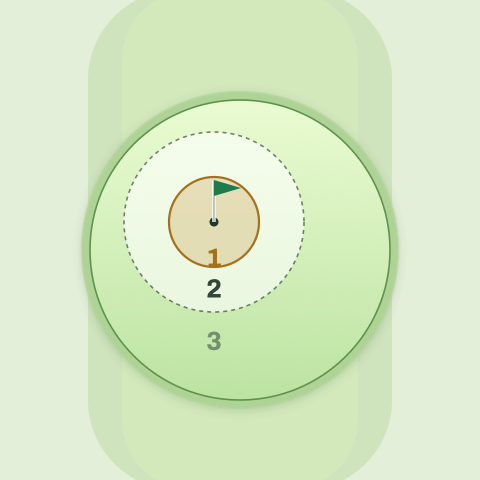
Putt rings
Finish inside the gold ring and it is a one-putt, inside the pale ring two, anywhere else on the green three. The rings shrink as the green gets steeper, so a tilted green punishes a long approach twice over.
How to play Putt rings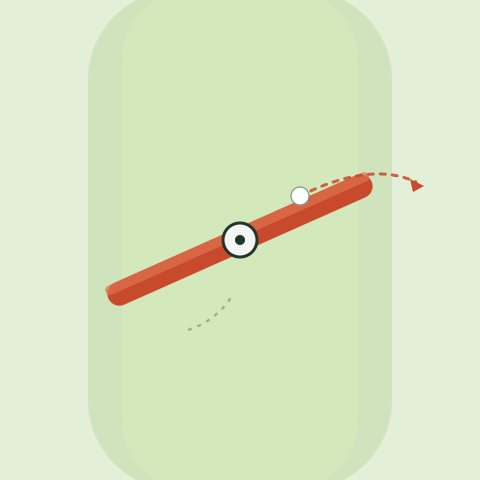
The arm
A sweeping bar that knocks your ball clear. If your ball comes to rest inside its circle you cannot play on until the arm has struck it, so there is no shooting around it — only landing somewhere else.
How to play The arm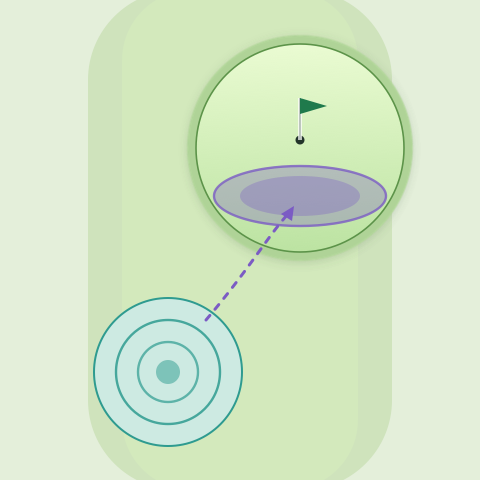
Portal
Sink your ball into the satellite green and you come out of the purple portal beside the pin. On the longest holes it will not take you the whole way — it carries you a set distance up the fairway instead.
How to play Portal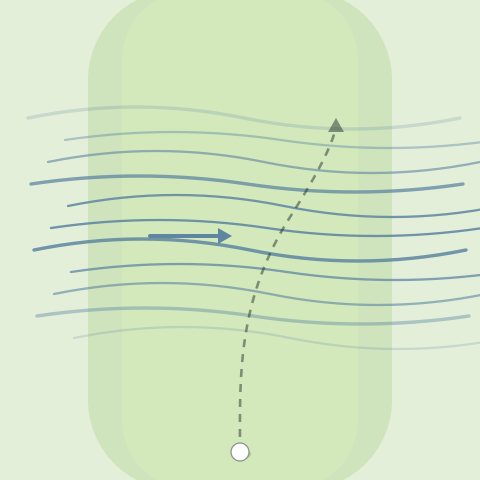
Gust
A band of fast-moving air across the hole. Only flight that crosses the band gets pushed, so you can fly over the top of it or lay up short and walk under it on your next shot.
How to play Gust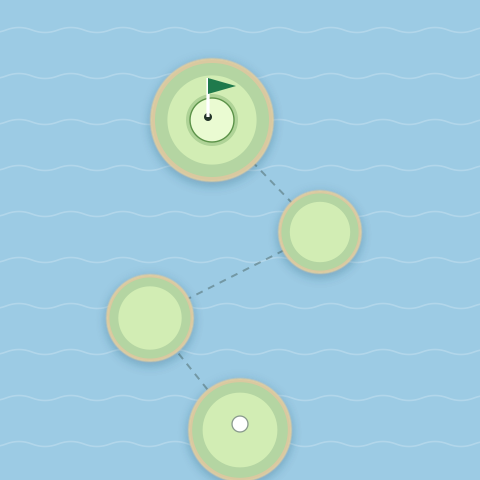
The crossing
A rare hole played entirely over open water, crossed island to island. Every shot is a forced carry — there is no rough and no out of bounds, only the sea. The stepping stones vary in size and shape, so the same island is a fatter or thinner target depending which way you come in at it, and each wears a rim of rough that grabs a running ball. The last one is different: it is the green and nothing else, no apron and nowhere to bail out, so the final carry either leaves you putting or leaves you wet. A ball in the water drops back on the island you played from, so a bad carry costs a stroke and the shot again rather than the hole. A crossing is worth an extra shot, so it always plays a stroke longer than the hole underneath it: a short two-hop crossing shows as a par 4, and the longest, a five-island trek, as a par 7. About one round in six has one, and never two.
How to play The crossing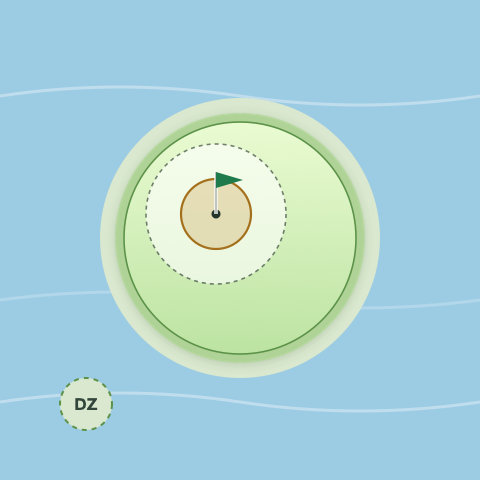
Island green
All carry and no bailout. There is a thin collar you can just about hold, and if you miss it you are dropping at the marked zone and playing your next shot from there.
How to play Island green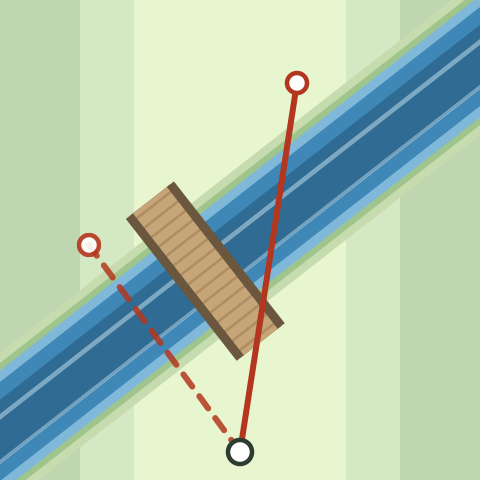
The burn
A river cut across the fairway on the diagonal, draining into the surrounding ocean, lake, or forest river on one side. The diagonal is the whole point. A lake asks one question — carry it or lay up short. Angling the burn makes the same question continuous: down one side it is a short carry that leaves you out to the side and a long way from the green, down the other a much longer one that leaves you well up the hole, and every line between the two is priced somewhere in between. It is water, so finding it costs a stroke and a drop, and a ball that lands short and runs on finds it just as surely as one that never got there. The cart path always crosses it on a deck, and half of all burns also carry a bridge, set down near the middle where it is in play. The bridge is the gamble: land on the deck and the ball kicks on hard across to the far bank instead of drowning, so you can cross with far less club than the carry asks for — and miss it by a couple of yards and you are wet. The tag in the corner tells you how far out the water lies.
How to play The burn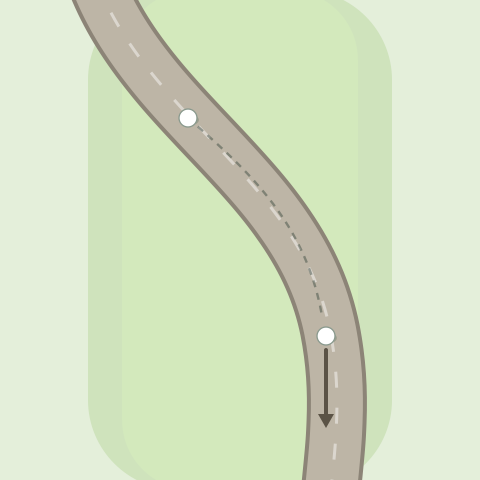
Cart path
Land on it and the ball runs a very long way. The crowned surface funnels a bouncing ball along the path rather than letting it skip off the side, which sometimes makes it worth aiming at on purpose.
How to play Cart path
The Spooky Forest
Every course from 21 to 31 October, and a rare haunted day now and then after that, is the Spooky Forest: the pine forest at dusk, with a lake and a haunted mansion beside every hole. Two of its obstacles have a new look, with the same rules as ever:
- The ghost. It takes the thief's place: it haunts an uneven patch of a landing zone, and a ball that stops in it is carried back down the hole to its crypt in the deep rough. No penalty stroke, but a hard lie and lost yards.
- Jack-o'-lanterns. They play exactly like kick boulders: a rolling ball that hits one is blocked, then kicked hard up the hole.
Leaderboards and friends
When you finish, you see how your round compares with everyone else who played that day, including the percentage of players you beat. Past scores stay on the leaderboard and you can watch a playback of the best card of the day. You can also create a private group with a join code to play against friends only.
Five-shot target range
Members can play an unranked five-shot range challenge. Pick a 50, 100, 150 or 200-yard flag, read the changing crosswind and time each swing. Every ball scores up to 1,000 points by finishing close to the target, and your best five-shot total is saved to your account. Range scores never affect the daily leaderboard.
The Wild Three
A short set of three holes at the same venue as today’s nine, built from the same date, so everyone plays the same three. It takes a couple of minutes rather than five.
The limits that keep a full round calm — one island green, one crossing, one burn across nine holes — all come off here, and holes stack things a nine never would: a burn and a portal on the same hole, boulders and lava through the landing zone. Every hole asks something. Timing hazards are the exception. A windmill arm or a gust is luck rather than a choice, and with one go a day a hazard you could not read would decide your card, so a Wild Three carries at most one of them and most sets have none.
You get one go a day, free on every plan and with no account needed — one ranked card, the same deal as the nine. It finishes on its own result card rather than being filed as a practice round, and tapping Wild Three again later brings that card back up, the way Play today does for the nine. It never touches your daily card.
Practice has a tab for each. Daily 9 holds today’s nine, a fresh random nine and every previous day; Wild Three holds the same three things for the short set. Today’s course unlocks on either side once its own ranked card is in, free and unlimited, so you can go back and work out what you should have done.
Practice past daily nines
Practice includes every previous Daily Holes course, newest first, as well as a fresh random nine. Everything here is unranked and never reaches the leaderboard.
Today’s nine is free to practice as many times as you like, on every plan — but only once you have finished today’s ranked round. Until your card is in, it stays locked, so nobody can scout the course before posting a score. Past and random courses are capped instead: three a day on the free plan, unlimited with the membership.
Tips for a lower round
- Lay up short of hazards instead of forcing a hero carry — the rough kills rollout.
- Use the fairway: it rolls out far more than rough, so a shorter, straighter shot often gains distance.
- On approach, aim for the front of the green so a skidding ball finishes near the pin.
- For hole-in-one chances on short holes, favour a slightly softer strike with a clean line.