The crossing
A hole played entirely over open water, crossed island to island. There is no fairway, no rough and no out of bounds — only stepping stones and the sea.
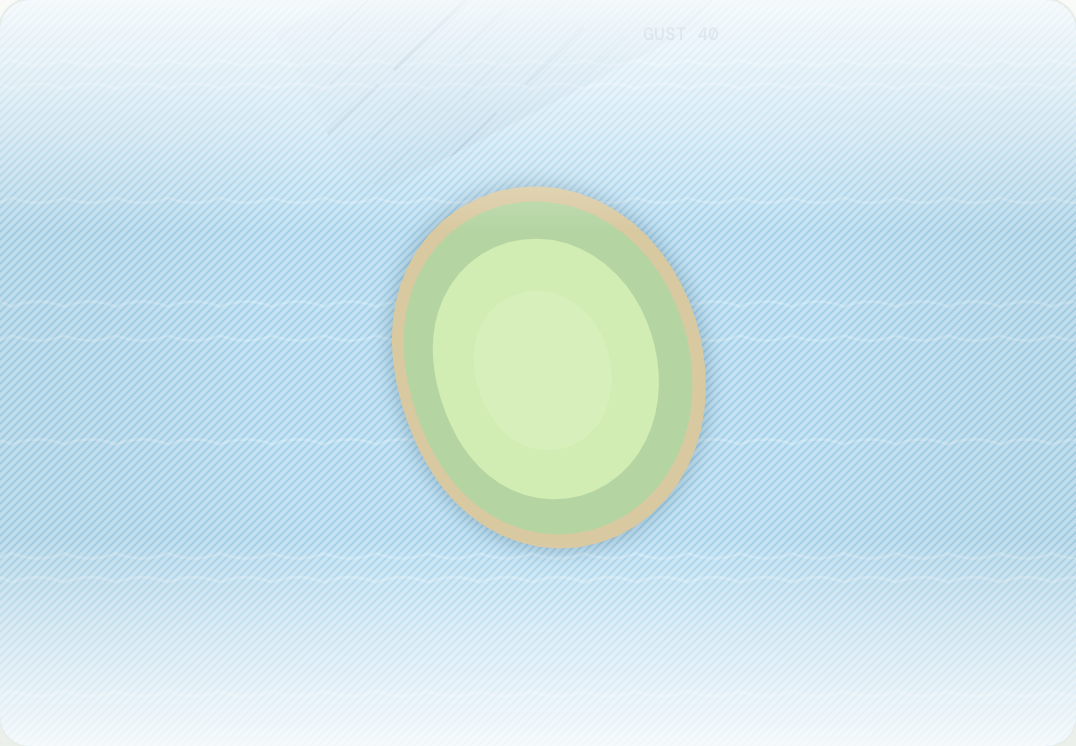
Every shot is a forced carry
On an ordinary hole a bad strike costs you distance. On a crossing it costs you the shot. There is nowhere to miss that is merely inconvenient, so the crossing is the one hole where the safe play and the good play are the same play: land on the island in front of you and worry about the next one afterwards.
The stones vary in size and shape, so the same island is a fatter or thinner target depending which way you come into it. Each one wears a rim of rough that grabs a running ball, which is a mercy — it is often the rough that keeps a slightly long carry on dry land.
The last island is different
The final stone is the green and nothing else. No apron, no collar, nowhere to bail out. The last carry either leaves you putting or leaves you wet, and there is no third outcome. It is the most exposed shot in the game and it comes at the end of a hole you have already survived four or five times.
What it costs, and what it is worth
A ball in the water drops back on the island you played from. A bad carry costs a stroke and the shot again rather than the hole, which is what makes the crossing playable at all.
Because it is harder than the hole underneath it, a crossing is always worth an extra shot: a short two-hop crossing shows as a par 4, and the longest, a five-island trek, as a par 7. Score to that par and you have played it well.
How to play it
- Aim at the middle of the island, not the near edge. A carry that pitches on the front and runs is how most balls get wet.
- Take the widest crossing of each island rather than the shortest hop — the fat part of the stone is worth more than twenty yards saved.
- Do not chase the green from two islands out. A crossing punishes ambition more reliably than any hazard in the game.
- The rough rim is your friend on a long carry. Landing in it beats landing beyond it.
Where you will meet it
A crossing turns up on about one round in six, and never twice in the same round. Any hole from par 3 to par 6 can become one.