The putt rings
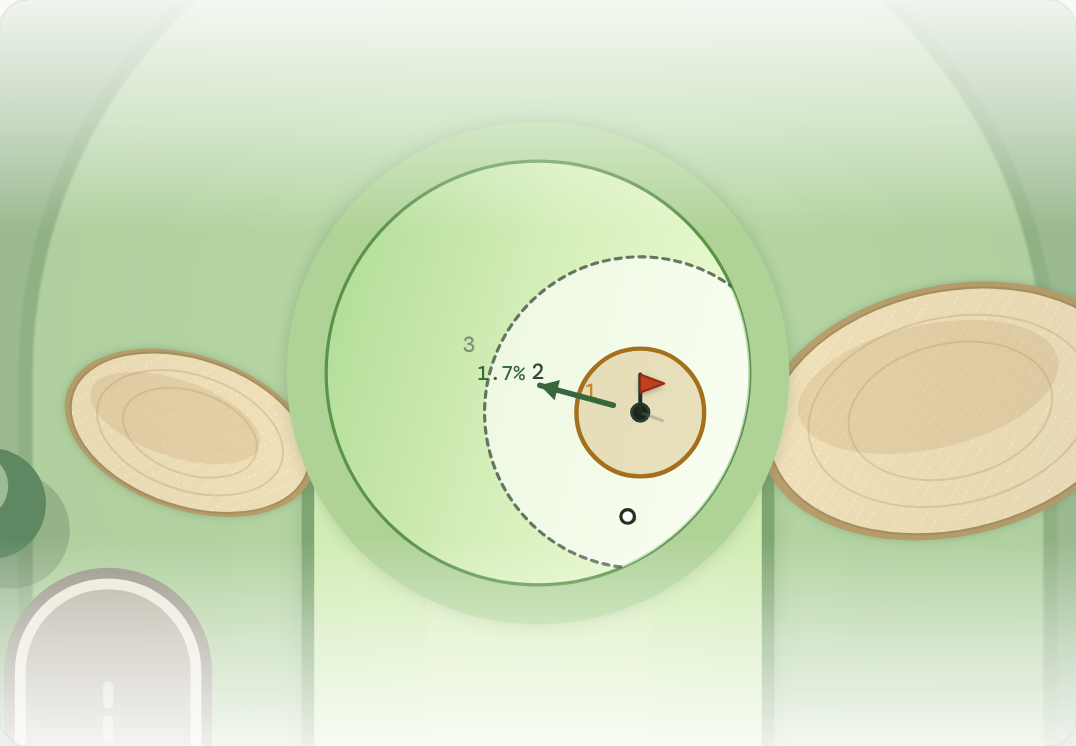
Finish inside the gold ring and it is a one-putt, inside the pale ring two, anywhere else on the green three. The rings are the scoring system, and they shrink as the green tilts.
The approach is the putt
There is no putting stroke to time. Where your approach finishes decides your score on the green, which means every shot into a green is really a shot at the gold ring — and the difference between a good approach and a great one is a whole stroke, immediately.
This is why the front of the green is worth so much. A ball that pitches short and releases towards the pin gains ground in exactly the right direction. A ball that pitches at the pin has already used its rollout getting there.
Slope shrinks the rings
The steeper the green, the smaller both rings become. A tilted green therefore punishes a long approach twice over: it is harder to get close, and close has to mean closer.
The green shading tells you which way it falls — the high side is lit and the low side sits in shadow, and the deeper the shadow the steeper the tilt. It is worth reading that before you choose your club, not after you have hit it.
How to play it
- Aim at the front edge on any green you can run the ball into. Rollout on a green is the highest of any surface you play from.
- On a steep green, take the safe side of the pin. The gold ring is small enough that the difference between brave and reckless is a few yards.
- A long first putt is not a disaster — it is a three. Protect against the four by not short-siding yourself.
- Read the shading before clubbing. A dark low side means the rings are tight.
Where you will meet it
Every hole ends on a green, so the rings are the one thing you meet nine times a round.